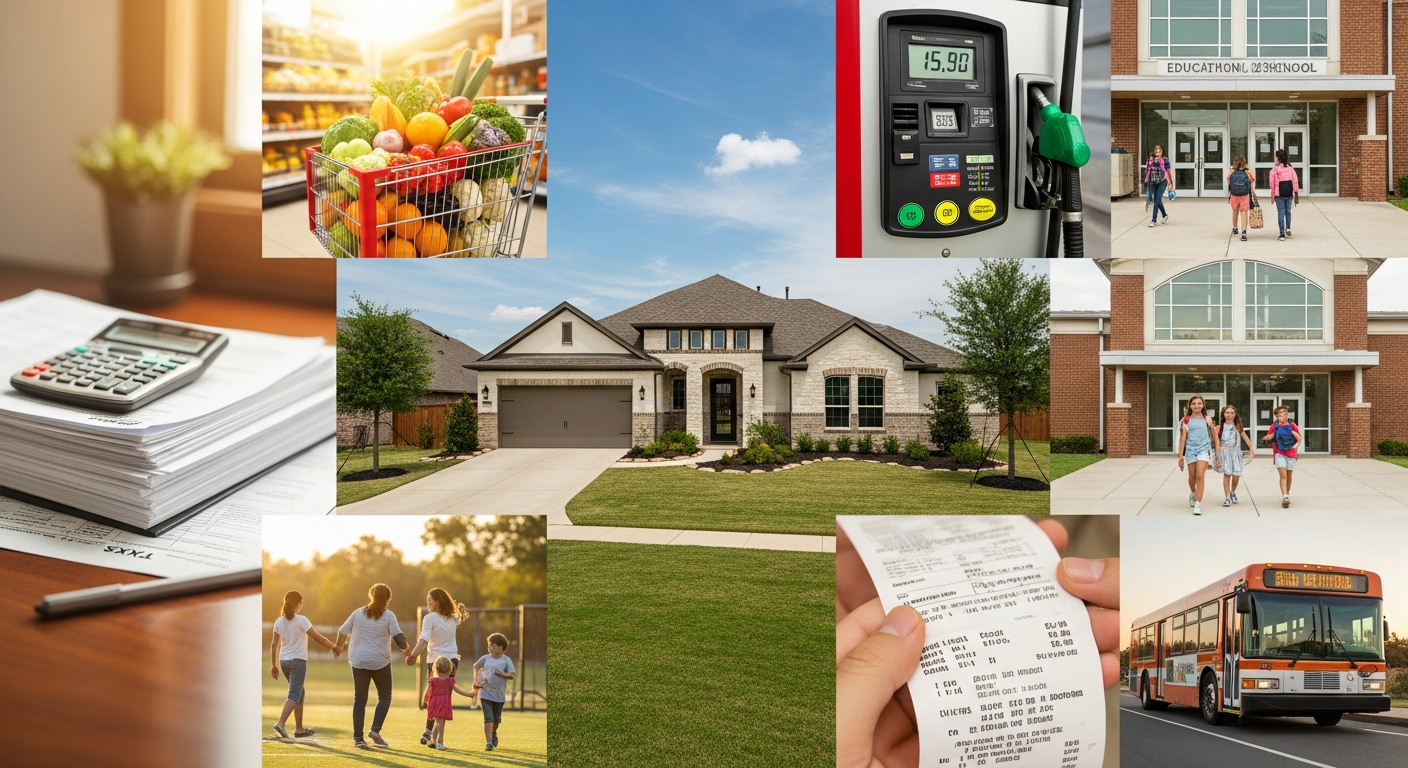
The Woodlands consistently ranks among the best places to live in Texas, but what does it actually cost to call this community home? This guide breaks down housing, taxes, groceries, schools, healthcare, utilities, and commute expenses so you can build a realistic budget before making the move.
Why The Woodlands Attracts So Many Families
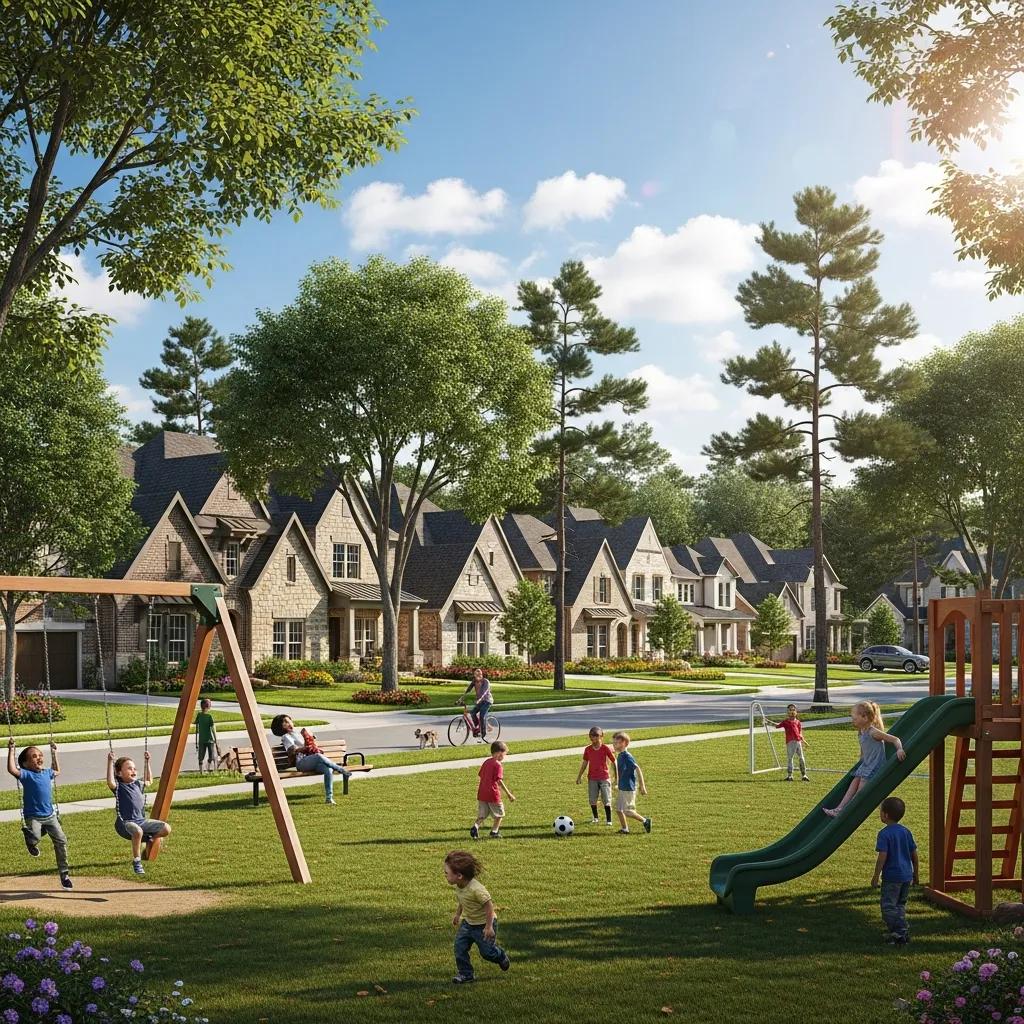
The Woodlands is a 28,000-acre master-planned community about 30 miles north of downtown Houston in Montgomery County, Texas. Since its founding in 1974, it has grown into a self-contained suburb of roughly 120,000 residents with its own employment centers, top-rated schools, resort-caliber recreation, and a 220-mile trail system winding through mature pine and hardwood forest.
For families weighing a move to the Houston metro, The Woodlands stands out for its combination of safety, schools, and quality of life. But those advantages come with a price tag that differs from inner-loop Houston or neighboring suburbs like Spring and Conroe. Understanding the full cost picture — not just the mortgage payment — is essential for making a confident decision.
Housing Costs
Housing is the single largest line item in any Woodlands budget, and prices vary significantly depending on property type, village, and lot size.
Median Home Prices by Property Type (2025–2026)
| Property Type | Median Price | Typical Sq Ft | Notes |
|—————|————-|—————|——-|
| Single-family home | $525,000 – $575,000 | 2,400 – 3,800 | Bulk of inventory across all nine villages |
| Townhome / patio home | $350,000 – $450,000 | 1,600 – 2,400 | Popular in Creekside Park, Sterling Ridge, Alden Bridge |
| Condo | $200,000 – $325,000 | 1,000 – 1,800 | Limited inventory, mostly near Town Center and Hughes Landing |
| Custom estate | $1,000,000 – $3,000,000+ | 4,000 – 8,000+ | Carlton Woods, East Shore, preserve-front lots in Creekside Park |
Price Ranges by Village
Not all villages carry the same price tag. Here is a general range based on recent sales data:
| Village | Entry-Level Price | Median Price | Upper Range |
|———|——————|————-|————-|
| Alden Bridge | ~$350,000 | Mid-$400Ks | $850,000 |
| Cochran’s Crossing | ~$350,000 | Low-$500Ks | $900,000 |
| College Park | ~$325,000 | Mid-$400Ks | $750,000 |
| Creekside Park | ~$400,000 | Mid-$500Ks | $1,500,000+ |
| East Shore | ~$800,000 | $1,200,000 | $3,000,000+ |
| Indian Springs | ~$325,000 | Low-$500Ks | $900,000 |
| Panther Creek | ~$300,000 | Mid-$400Ks | $800,000 |
| Sterling Ridge | ~$400,000 | Mid-$500Ks | $1,000,000+ |
| Carlton Woods | ~$1,200,000 | $2,000,000 | $5,000,000+ |
How The Woodlands Compares to Houston Metro
The Woodlands carries a premium over the Houston metro median, which sits around $340,000 to $360,000 for single-family homes. Buyers typically pay 40% to 60% more for a comparable home in The Woodlands, but that premium buys significantly better schools, lower crime rates, and stronger long-term appreciation. Over the past decade, Woodlands home values have appreciated at an average rate of 4% to 5% annually, outpacing the broader Houston market.
Property Taxes
Texas has no state income tax, which is a major draw for relocating families — but property taxes are how the state funds schools, infrastructure, and local services. Understanding the tax structure in The Woodlands is critical because the effective rate is higher than many buyers expect.
How Property Taxes Work Here
Your total property tax bill is the sum of several overlapping taxing entities:
| Taxing Entity | Typical Rate |
|—————|————-|
| Montgomery County | ~0.36% |
| Conroe ISD (or Tomball ISD for Creekside Park) | ~1.17% – 1.24% |
| The Woodlands Township | ~0.21% |
| Municipal Utility District (MUD) | ~0.15% – 0.55% |
| Lone Star College | ~0.11% |
| Montgomery County Hospital District | ~0.07% |
| Emergency Services District | ~0.05% – 0.10% |
The combined effective tax rate in The Woodlands typically falls between 2.1% and 2.7%, depending on which MUD your property sits in. MUD rates vary meaningfully across the community, so two homes at the same price in different villages can produce annual tax bills that differ by $2,000 or more.
Sample Annual Tax Bills
| Home Value | At 2.1% Rate | At 2.5% Rate | At 2.7% Rate |
|———–|————-|————-|————-|
| $400,000 | $8,400 | $10,000 | $10,800 |
| $550,000 | $11,550 | $13,750 | $14,850 |
| $750,000 | $15,750 | $18,750 | $20,250 |
| $1,000,000 | $21,000 | $25,000 | $27,000 |
Homestead Exemption
If The Woodlands will be your primary residence, you qualify for a homestead exemption that reduces your taxable value. Key exemptions include:
- General homestead exemption — Conroe ISD offers a $100,000 reduction off the appraised value for school district taxes
- County homestead exemption — Montgomery County provides a 20% reduction (minimum $5,000)
- Over-65 or disabled exemption — Additional $10,000 off for Conroe ISD, plus a tax ceiling that freezes your school district taxes at their current level
- Tax cap — Homesteaded properties are limited to a 10% increase in appraised value per year, which protects owners in a rising market
Filing for homestead exemption is free and should be done within the first year of ownership through the Montgomery Central Appraisal District. On a $550,000 home, the combined exemptions can save a homeowner $2,500 to $3,500 per year.
Grocery, Dining & Everyday Expenses
Day-to-day living costs in The Woodlands run slightly above the national average, largely driven by housing — but groceries, dining, and gas are generally in line with or just marginally above what you would find elsewhere in the Houston metro.
Grocery Costs
The Woodlands has no shortage of grocery options: H-E-B, Kroger Marketplace, Whole Foods, Trader Joe’s, Costco, and Aldi are all within the community or immediately adjacent. A typical family of four can expect to spend $900 to $1,200 per month on groceries depending on dietary preferences and store choices.
| Item | Average Price (2025–2026) |
|——|————————–|
| Gallon of milk | $3.70 – $4.20 |
| Dozen eggs | $3.50 – $4.50 |
| Loaf of bread | $3.00 – $4.00 |
| Boneless chicken breast (1 lb) | $4.50 – $5.50 |
| Ground beef (1 lb) | $5.50 – $7.00 |
| Rice (5 lb bag) | $4.50 – $6.00 |
| Apples (1 lb) | $1.80 – $2.50 |
Dining Out
The Woodlands offers everything from fast-casual chains to upscale waterfront dining at Hughes Landing. Typical costs:
- Casual dining (Cheddar’s, Chili’s, local Tex-Mex) — $15 to $25 per person
- Mid-range restaurants (Escalante’s, Fielding’s, Hubbell & Hudson Bistro) — $30 to $55 per person
- Upscale dining (Del Frisco’s, Robard’s, Morton’s) — $60 to $100+ per person
- Coffee — $5 to $7 for a specialty drink at local shops
Gas Prices
As of early 2026, regular unleaded in The Woodlands averages $2.60 to $3.00 per gallon, which is typically 10 to 20 cents below the national average. Texas fuel taxes are among the lowest in the country, keeping pump prices competitive.
Overall Cost Index
According to the Council for Community and Economic Research, The Woodlands’ overall cost of living index is approximately 105 to 110 (where 100 equals the national average). Housing drives the premium — grocery, transportation, and miscellaneous costs sit close to or slightly below national norms.
Schools & Education
School quality is one of the primary reasons families choose The Woodlands over other Houston-area suburbs. The community is served by two well-regarded public school districts, plus several private and charter options.
Conroe ISD
The majority of The Woodlands falls within Conroe Independent School District, one of the largest districts in Texas with over 73,000 students. Conroe ISD earned an overall B rating from the Texas Education Agency and consistently posts above-average standardized test scores. Key Woodlands campuses include:
- The Woodlands High School — One of the top-ranked public high schools in the Houston area. Offers 30+ AP courses, competitive UIL academics, and powerhouse athletics programs. Niche rating: A+.
- College Park High School — Strong AP and dual-credit offerings, competitive athletics at the 6A level, and well-regarded fine arts programs. Niche rating: A.
- Knox Junior High, McCullough Junior High, Collins Intermediate — All rated A or A- by Niche with strong academic and extracurricular programs.
- Elementary campuses — Galatas, Glen Loch, Buckalew, Powell, Hailey, Bush, and others each carry strong ratings and active parent communities.
Tomball ISD
Creekside Park, the westernmost village, is zoned to Tomball ISD, which carries an overall A rating from Niche and the TEA. Creekside Park students attend Creekview Elementary, Creekside Park Jr. High, and Tomball Memorial High School — all well-rated campuses with modern facilities.
Private School Options
| School | Grades | Annual Tuition (Approx.) | Notes |
|——–|——–|————————-|——-|
| The John Cooper School | PK–12 | $28,000 – $35,000 | Top independent school in Texas; rigorous academics |
| The Woodlands Christian Academy | PK–12 | $12,000 – $18,000 | Faith-based; strong athletics and college prep |
| Legacy Preparatory Christian Academy | PK–8 | $10,000 – $14,000 | Classical Christian education model |
| The Woodlands Preparatory School | PK–12 | $13,000 – $20,000 | IB World School; international focus |
| St. Anthony of Padua Catholic School | PK–8 | $8,000 – $11,000 | Parish school with strong community ties |
Higher Education
Lone Star College–Montgomery is located within The Woodlands and offers associate degrees, workforce certifications, and dual-credit programs for high school students. Sam Houston State University and the University of Houston also maintain satellite campuses nearby.
Healthcare
Access to quality healthcare is a practical consideration that many cost-of-living guides overlook. The Woodlands has grown into a regional medical hub with multiple hospital systems and specialty practices.
Major Hospitals
- Houston Methodist The Woodlands Hospital — A 325-bed full-service hospital opened in 2017 on the western edge of the community. Offers emergency care, cardiovascular services, neuroscience, oncology, and orthopedics. Consistently rated among the top hospitals in the Houston metro.
- Memorial Hermann The Woodlands Medical Center — A 397-bed facility on I-45 and The Woodlands Parkway. Level II trauma center, comprehensive cancer center, and a well-known women’s and children’s program. One of the busiest hospitals in Montgomery County.
- CHI St. Luke’s Health — Lakeside Hospital — A community hospital near Hughes Landing specializing in surgical services, emergency care, and outpatient procedures.
- Texas Children’s Hospital The Woodlands — A dedicated pediatric hospital providing specialty and subspecialty care, urgent care, and emergency services for children.
Healthcare Costs
Healthcare costs in The Woodlands are generally in line with Houston metro averages. Employer-sponsored health insurance premiums for a family of four average $1,400 to $1,800 per month for the employee’s share, depending on plan tier. Individuals on the ACA marketplace can expect premiums of $400 to $700 per month before subsidies. Copays for primary care visits typically run $25 to $50, and specialist visits $40 to $75.
Transportation & Commute
The Woodlands was designed around the car, but the community does offer alternatives for commuting into Houston.
Driving Routes to Houston
- Interstate 45 — The primary corridor to downtown Houston. From The Woodlands, expect 35 to 45 minutes off-peak and 55 to 80 minutes during weekday morning rush depending on your exact starting point and destination.
- Hardy Toll Road — A less-congested toll alternative that parallels I-45. Typical toll from The Woodlands to the north end of downtown runs about $4 to $6 one way. Shaves 10 to 20 minutes off the commute during peak hours.
- The Woodlands Parkway / FM 2978 — Key east-west arteries for reaching I-45, the Hardy Toll Road, or employment centers along the FM 2978 corridor toward Magnolia and Tomball.
Park & Ride
The Woodlands Express operates commuter bus service from three park-and-ride locations to several stops in downtown Houston and the Texas Medical Center. Monthly passes run approximately $140 to $180, which compares favorably to the combined cost of gas, tolls, parking, and vehicle wear. Many commuters use the 50- to 70-minute ride for work, reading, or rest.
Local Getting Around
Within The Woodlands, most errands involve a 5- to 15-minute drive. The 220-mile pathway system makes cycling and walking viable for recreation and some local trips, though a car remains necessary for daily life. Average household vehicle costs (insurance, fuel, maintenance) in the Houston metro run about $800 to $1,100 per month per vehicle.
Utilities
Utility costs in The Woodlands are influenced by the hot, humid Texas climate — air conditioning drives electric bills for roughly seven months of the year.
Average Monthly Utility Costs
| Utility | Average Monthly Cost | Notes |
|———|———————|——-|
| Electricity | $180 – $280 | Summer bills can spike to $350+ in larger homes; shop deregulated plans on PowerToChoose.org |
| Water & sewer | $80 – $130 | MUD-provided; varies by district and irrigation use |
| Natural gas | $30 – $60 | Used primarily for heating, water heater, and cooking |
| Internet | $60 – $90 | Xfinity, AT&T Fiber, and Tachus (local fiber) are the primary providers |
| Cable / streaming | $15 – $75 | Most households have shifted to streaming services |
| Trash & recycling | $0 – $30 | Included in MUD fees for most residents; some pay separately |
| Cell phone | $50 – $100 per line | Standard national carrier pricing |
Total Monthly Utility Estimate
A typical household in The Woodlands should budget $400 to $600 per month for all utilities combined, with seasonal variation driven primarily by electricity usage in summer.
Electricity Tips
Texas has a deregulated electricity market, which means you choose your retail electric provider. Rates typically range from $0.10 to $0.15 per kWh on fixed-rate plans. Locking in a 12- to 24-month fixed plan in the fall — when demand is lower — often secures the best rates. Avoid variable-rate plans, which can spike during heat waves.
How The Woodlands Compares
Here is a side-by-side look at how The Woodlands stacks up against other popular Houston-area suburbs across key cost-of-living categories:
| Category | The Woodlands | Katy | Sugar Land | Pearland | Houston (Inside Loop) |
|———-|————–|——|————|———-|———————–|
| Median home price | $525K – $575K | $380K – $430K | $400K – $450K | $330K – $370K | $450K – $550K |
| Property tax rate | 2.1% – 2.7% | 2.4% – 3.0% | 2.4% – 2.8% | 2.8% – 3.2% | 2.0% – 2.5% |
| Top school district | Conroe ISD / Tomball ISD | Katy ISD | Fort Bend ISD | Pearland ISD | HISD (varies widely) |
| School rating (Niche) | A / A+ | A+ | A+ | A | C+ to A (campus-dependent) |
| Commute to downtown Houston | 40 – 70 min | 35 – 60 min | 30 – 50 min | 25 – 45 min | 10 – 25 min |
| Grocery costs | At or slightly above average | At average | At average | At average | Slightly above average |
| Crime rate | Well below Houston metro average | Below average | Below average | Average | Above average |
| Median household income | ~$130,000 | ~$105,000 | ~$115,000 | ~$95,000 | ~$65,000 |
| Master-planned amenities | Extensive (trails, pools, events) | Strong (Katy Trail, LaCenterra) | Moderate (Sugar Land Town Square) | Limited | Urban amenities |
| Employment centers nearby | ExxonMobil, Energy Corridor North | Energy Corridor, Katy Mills | Sugar Land Business Park, TMC-adjacent | TMC, Clear Lake | CBD, TMC, Galleria |
Key Takeaways
- The Woodlands vs. Katy — Katy offers lower home prices and Katy ISD (one of the highest-rated districts in Texas), but The Woodlands has a more walkable town center, better trail infrastructure, and a stronger sense of community identity. Property taxes in Katy can actually be higher due to MUD rates in newer subdivisions.
- The Woodlands vs. Sugar Land — Sugar Land is closer to the Medical Center and offers Fort Bend ISD, another top-rated district. The Woodlands commands a price premium but provides more extensive master-planned amenities and a cohesive community feel that Sugar Land’s more fragmented subdivision layout does not match.
- The Woodlands vs. Pearland — Pearland offers the lowest home prices in this comparison and the shortest commute to downtown, but school ratings and community amenities lag behind The Woodlands.
- The Woodlands vs. Houston (Inside Loop) — Urban Houston offers walkability, cultural institutions, and short commutes, but at the cost of higher crime rates, inconsistent school quality, and less family-oriented infrastructure.
Is The Woodlands Worth the Cost?
The honest answer: it depends on what you value most.
The Woodlands is not the cheapest suburb in the Houston metro. You will pay a premium on housing, and property taxes will be a meaningful annual expense. But the cost picture improves when you factor in what that money buys:
- No state income tax — A family earning $150,000 in California or New York would save $10,000 to $15,000 per year in state income taxes by moving to Texas. That savings alone can offset the property tax differential.
- Top-tier schools at no tuition cost — Conroe ISD and Tomball ISD deliver education quality that families in other metros pay $15,000 to $35,000 per year in private school tuition to access.
- Low crime and high safety — The Woodlands consistently reports crime rates 60% to 70% below the Houston metro average, reducing both tangible and intangible costs of living in a high-crime area.
- Strong home appreciation — Woodlands properties have historically appreciated at rates that outpace the Houston metro, making your home purchase a more effective long-term investment.
- Quality of daily life — The trail system, resort-style pools, lakefront dining, and community events contribute to a day-to-day lifestyle that reduces the felt need for expensive vacations and entertainment spending.
For a family of four earning $130,000 to $200,000 per year, The Woodlands offers a cost of living that is manageable and well-justified by the quality of schools, safety, and amenities. For households earning below $100,000, the housing costs may be a stretch — though townhomes and condos in the $250,000 to $400,000 range provide a more affordable entry point.
The best way to assess whether The Woodlands fits your budget is to run the numbers specific to your situation: income, savings, family size, commute requirements, and school priorities. The Kink Team can help you identify neighborhoods and price points within The Woodlands that match your financial picture and lifestyle goals. Whether you are relocating from out of state or comparing suburbs across the Houston metro, Diane Kink and her team will give you the honest, data-driven guidance you need to make a confident move.