Living In
Eastshore
Comprehensive Residential Market and Urban Function Analysis
East Shore, The Woodlands, TX
Executive Summary
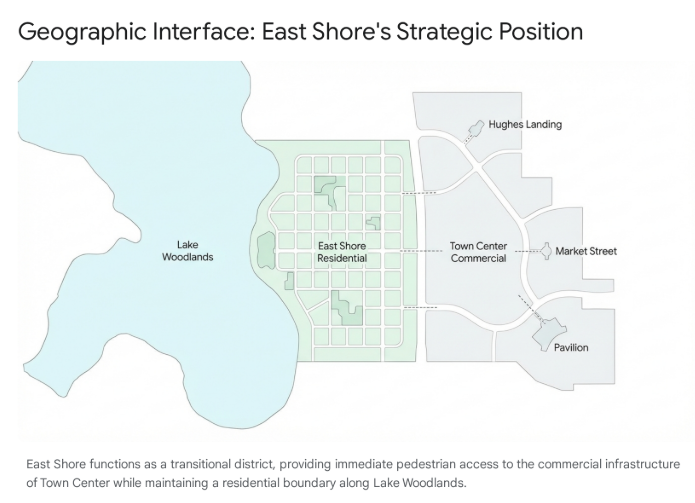
The neighborhood of East Shore operates as a highly specialized, premium residential enclave situated within the broader master-planned community of The Woodlands, Texas. Positioned strategically along the eastern perimeter of the 200-acre Lake Woodlands, this specific micro-market functions as a critical transitional zone, bridging the high-density commercial and civic infrastructure of The Woodlands Town Center with the lower-density, environmentally preserved suburban villages that characterize the wider region.1 Frequently designated as the "Garden District" of The Woodlands, the neighborhood is defined by its rigorous application of New Urbanism development principles, which prioritize pedestrian walkability, diverse historical architectural typologies, and immediate integration with both natural waterfront amenities and dense retail corridors.
The primary drivers of residential interest and real estate acquisition in East Shore revolve around its highly differentiated housing stock. The built environment integrates classical architectural vernaculars—ranging from Greek Revival to Southern Coastal styles—with modern, spatially efficient, low-maintenance living formats.4 The area consistently attracts purchasers who are seeking a pedestrian-scaled operational environment that significantly reduces daily vehicle dependency for retail, dining, and recreational usage.1 Furthermore, the neighborhood's direct structural integration with the Town Center Trolley transit network, the regional 220-mile hike-and-bike trail system, and the non-motorized boating infrastructure of Lake Woodlands creates a lifestyle use case that is anomalous within the context of the broader, predominantly vehicle-dependent Houston metropolitan area.
Market positioning for East Shore firmly establishes it within the upper echelon of The Woodlands' real estate hierarchy. With baseline property values routinely exceeding the million-dollar threshold, and active premium listings averaging significantly higher, the area competes directly for capital with other top-tier enclaves such as Carlton Woods and Carlton Woods Creekside.7 However, the functional and spatial tradeoffs differ considerably: whereas adjacent premium neighborhoods traditionally offer expansive, heavily forested acreage and private golf-centric amenities, East Shore trades gross lot size for geographical proximity to the urban core and immediate lakefront integration.8 The resulting residential environment is characterized by robustly stable property values, rigorous architectural and aesthetic controls, and a heavily managed community association structure that preserves the area's physical and operational integrity over the long term.
Location Context & Urban Role
The geographic placement of East Shore is fundamental to understanding its functional role and premium valuation within the Houston metropolitan ecosystem. Located approximately 30 miles north of the Houston Central Business District (CBD) in Montgomery County, the neighborhood occupies a highly strategic and heavily engineered 26-acre footprint within the 77380 ZIP code.
The physical boundaries of the neighborhood explicitly dictate its operational mechanics and isolation. To the west, the community is bordered entirely by Lake Woodlands, which provides a natural, immutable geographic terminus and a significant recreational asset.1 To the northern perimeter, the area is bounded by Woodlands Parkway, a major arterial thoroughfare that facilitates high-capacity regional ingress and egress, particularly to Interstate 45 and the Hardy Toll Road.1 To the east and south, the neighborhood directly interfaces with Grogan's Mill Road and the dense commercial districts of The Woodlands Town Center and Hughes Landing.1 This highly specific cartographic placement creates a localized environment where the hard boundaries insulate the internal residential streets from heavy commercial through-traffic, while multiple pedestrian bridges and transit access points allow residents to cross seamlessly into commercial zones without utilizing a personal vehicle.
As a functional component of the city's broader ecosystem, East Shore represents a distinct evolution in the original development philosophy of The Woodlands. When visionary developer George P. Mitchell established The Woodlands in 1974, the primary organizing principle was the absolute preservation of the natural forest canopy, resulting in "invisible" suburban infrastructure concealed by dense pine timberlines and strict building setback lines. East Shore, conceptualized and developed primarily in the 2000s and 2010s, introduces a contrasting but complementary urban philosophy. Rather than hiding behind heavy timberlines, East Shore is designed to be highly visible and architecturally overt It is structured around formal civic spaces, manicured garden squares, ornamental streetlamps, and traditional geometric street grids with rear-alley access.
Within this footprint lies Mitchell Island, a parcel originally created in 1985 to house the corporate headquarters of Mitchell Energy and Development. Following the abandonment of that corporate plan in 2005, the island's future shifted. Initial residential plans designated it for massive, ultra-luxury custom estates starting at $5 million; however, structural and market demands have shifted the trajectory toward high-density, three-story residential development, further cementing East Shore's role as a high-density, urban-style housing hub.10 Ultimately, East Shore functions as the premier urban residential anchor to the Town Center, absorbing the demand for high-end, centralized housing that circumvents the maintenance requirements of the heavily wooded, multi-acre lots found in the original legacy villages.
Why People Move Here (Decision Drivers)
Relocation to East Shore is typically catalyzed by a specific convergence of behavioral priorities, spatial requirements, and location economics. Analysis of observable market patterns and transaction data indicates that purchasers in this neighborhood are driven by functional urban requirements rather than standard suburban accumulation factors, such as maximizing interior square footage or acquiring sprawling land acreage.
The Demand for Walkable Urban Infrastructure
The primary behavioral driver for real estate acquisition in East Shore is the desire for a pedestrian-oriented daily routine.10 In the broader context of the Texas real estate market and the Houston metropolitan area specifically, strict vehicle dependency is the baseline standard. East Shore intentionally subverts this regional model by offering immediate walking-distance access to major retail, dining, and civic nodes.1 Purchasers actively evaluate the geographic proximity to Market Street, an open-air, mixed-use retail center featuring a major grocery anchor (H-E-B), luxury boutique shopping, and varied dining establishments.11 Furthermore, the neighborhood's physical layout allows residents to access the Cynthia Woods Mitchell Pavilion, Waterway Square, and the Hughes Landing commercial sector via continuous, dedicated sidewalks and pedestrian bridges.5 The functional ability to execute daily errands, attend large-scale concerts, or commute to localized corporate office spaces entirely on foot represents a highly valued operational benefit that heavily dictates purchase decisions in this sector.
Housing Typology and the "Lock-and-Leave" Lifestyle
Another significant economic and behavioral driver is the distinct availability of specific housing formats that facilitate a low-maintenance, highly mobile lifestyle.18 A substantial proportion of the properties in East Shore—particularly the multi-story townhomes, condominiums, and brownstones located in enclaves like Waterway Landing and History Row—are engineered with a "lock-and-leave" functionality.19 This structural format heavily appeals to buyers who may travel extensively for business, maintain multiple primary residences, or simply wish to divest from the labor-intensive upkeep required by traditional, heavily wooded suburban lots. The utilization of zero-lot-line architectural designs, combined with comprehensive Homeowners Association (HOA) management that handles the maintenance of common areas, community landscaping, and frequently building exteriors, allows residents to minimize personal property management burdens without sacrificing the location's premium market positioning.
Proximity to Natural and Aquatic Amenities
The seamless integration of the neighborhood with Lake Woodlands serves as a co-primary attractant alongside the commercial walkability. Buyers meticulously evaluate the functional benefits of having immediate, non-vehicular access to a 200-acre body of water.1 The availability of private residential docks, centralized community boat launches, and immediate access to kayaking, canoeing, and paddleboarding infrastructure provides a localized recreational outlet that is exceptionally rare within high-density town center developments.1 The intersection of deep urban convenience with robust outdoor aquatic recreation—further supported by direct connection to The Woodlands' 220-mile hike-and-bike trail network—creates a compelling, highly differentiated value proposition.
Price-to-Location Tradeoffs
Buyers in East Shore are executing a highly specific price-to-location calculation. The financial barrier to entry is severe, with price-per-square-foot metrics among the highest in Montgomery County.23 Purchasers willingly accept smaller lot sizes, higher residential density, and premium pricing thresholds in direct exchange for time reclamation. By locating precisely on the border of the Town Center, residents drastically reduce transit time for daily consumption and entertainment activities, trading suburban land mass for geographic efficiency and aesthetic formalism.
Why People Stay (Retention Factors)
Once households are established within the neighborhood, residents demonstrate distinct and durable retention patterns. These patterns are not merely incidental but are driven by structural livability factors, stringent community governance, and intrinsic neighborhood adaptability.
Rigorous Governance and Aesthetic Protection
Long-term livability and asset protection in East Shore are heavily insulated by the governance of the East Shore Community Association, operating in tandem with the broader Woodlands Township covenant administration.1 The neighborhood operates under an intricate framework of deed restrictions and architectural standards that dictate landscaping modifications, property maintenance baselines, exterior paint applications, and land use.1 The explicit stated goal of these covenants is to preserve the design integrity of the dwellings and prevent the neighborhood deterioration that can accompany unregulated construction or deferred maintenance.24 While such regulations can be viewed by some demographics as restrictive constraints during the initial purchase phase, they act as powerful, stabilizing retention factors for long-term owners. The aggressive preservation of the "Garden District" aesthetic—including the continuous maintenance of ornamental streetlamps, ivy-clad stone walls, and formal green spaces—protects underlying property values and guarantees the baseline quality of the physical environment year over year.4
Dedicated Amenity Infrastructure
The localized, exclusive infrastructure serves as a primary anchor for long-term residency. The private East Shore Clubhouse, exclusively accessible to neighborhood residents and managed by the community association, functions as a centralized operational hub.1 Built specifically to accommodate the lifestyle needs of properties with compact lot sizes, the multi-million-dollar facility includes a 50-by-70-foot resort-style swimming pool featuring a zero-gravity entry and infinity edge, a fully equipped fitness center, meticulously maintained terrace gardens, and multi-purpose rooms for community classes and events.14 Because the smaller lot dimensions of the brownstones and townhomes frequently preclude the installation of private backyard pools, this shared infrastructure fulfills that essential recreational requirement, ensuring residents do not geographically outgrow the neighborhood simply due to a lack of exterior recreational space.14 Additionally, 24-hour private security and courtesy patrols provide a consistent baseline of operational stability and environmental control, further enhancing resident retention.25
Housing Flexibility Within the Micro-Market
The neighborhood exhibits strong internal adaptability regarding housing lifecycles. Because East Shore encompasses a remarkably diverse spectrum of housing typologies—ranging from $500,000 one-bedroom condominiums to large-scale custom waterfront estates exceeding $5.5 million—residents can theoretically scale their housing footprint up or down without ever leaving the geographic boundaries of the neighborhood.4 This structural flexibility allows the local micro-market to accommodate shifting household requirements over time. Residents can transition from a large, single-family custom home into an elevator-equipped, maintenance-free brownstone as their spatial needs contract, thereby reducing the necessity to relocate externally.
Lifestyle & Daily Living Patterns
he functional reality of daily life in East Shore is defined by a unique interplay between pedestrian infrastructure, managed public transit, and recreational programming. The neighborhood operates at a distinct pace, carefully balancing high-density commercial energy with residential seclusion.
Pedestrian and Transit Utilization
While private vehicle ownership remains standard for regional travel, vehicle dependency for localized, daily tasks is markedly reduced. Daily utilization patterns frequently involve pedestrian movement toward the Town Center for dining, grocery retail, or entertainment. A highly utilized component of the local transit ecosystem is the Town Center Trolley. The trolley provides a complimentary, climate-controlled, continuous loop connecting East Shore to major commercial nodes including Hughes Landing, the Montgomery County Library, Market Street, and The Woodlands Mall.
Operating seven days a week, with headways carefully managed to average approximately ten to twelve minutes, the trolley system allows residents to completely bypass the friction of navigating commercial parking structures during peak operational hours or major events. The integration of smartphone tracking applications (such as the Ride Systems App) allows residents to monitor trolley arrivals in real-time, integrating the transit option seamlessly into daily schedules. This infrastructure fundamentally alters how residents interact with the surrounding commercial zones, turning potential traffic liabilities into easily accessible amenities.
Park Integration and Recreational Cadence
The internal geography of East Shore is heavily punctuated by formal garden parks that dictate daily leisure and exercise patterns. Unlike the sprawling, unstructured nature reserves typical of outer suburbs, this community is organized around distinct, structured green spaces such as Ellipse Park, Olmstead Park, Colonial Park, and Southshore Park. These spaces are utilized daily for routine passive recreation, dog walking, and community gatherings. The physical architecture of the neighborhood—characterized by wide pedestrian sidewalks, private paved alleys, and tree-lined boulevards—actively encourages strolling as a primary mode of internal transportation.
The immediate proximity to the water's edge heavily dictates weekend and evening usage. There is a high concentration of non-motorized aquatic activities, with residents utilizing community launch points for kayaking, canoeing, and paddleboarding.11 For fitness routines, residents easily access the 3.2-mile Woodlands Waterway course or connect to the broader 220-mile pathway system.
Density, Pace, and Privacy Considerations
Given its proximity to high-capacity venues like the Cynthia Woods Mitchell Pavilion and Waterway Square, the neighborhood is subject to inevitable fluctuations in ambient noise and localized density, particularly during the summer concert season or municipal weekend events.28 However, the physical design of the neighborhood serves as an effective mitigant. The strategic use of gated enclaves (such as Waterway Landing), heavily landscaped perimeter buffers, and the natural barrier of the lake itself serve to absorb and deflect the intrusion of commercial activity into the residential zones.1 The pace of life within the residential streets remains remarkably tranquil, contrasting sharply with the immediate commercial vibrancy located just blocks away. Residents must, however, maintain a tolerance for the increased ambient activity that accompanies life adjacent to a major regional entertainment district.
Housing Stock Analysis
The housing supply in East Shore is structurally diverse but aesthetically unified, engineered to mimic the historical progression and architectural density of classic American towns. The development guidelines are highly specific, diverging entirely from the standard suburban tract home model found in earlier phases of The Woodlands development.

Architectural Typologies and Zoning
The built environment is a carefully curated amalgamation of distinct architectural vernaculars: Greek Revival, Charleston, Southern Spanish Colonial, French Eclectic, Southern Anglo-Colonial, and Southern Coastal. This architectural diversity is organized into specific sub-districts, enclaves, or "rows."
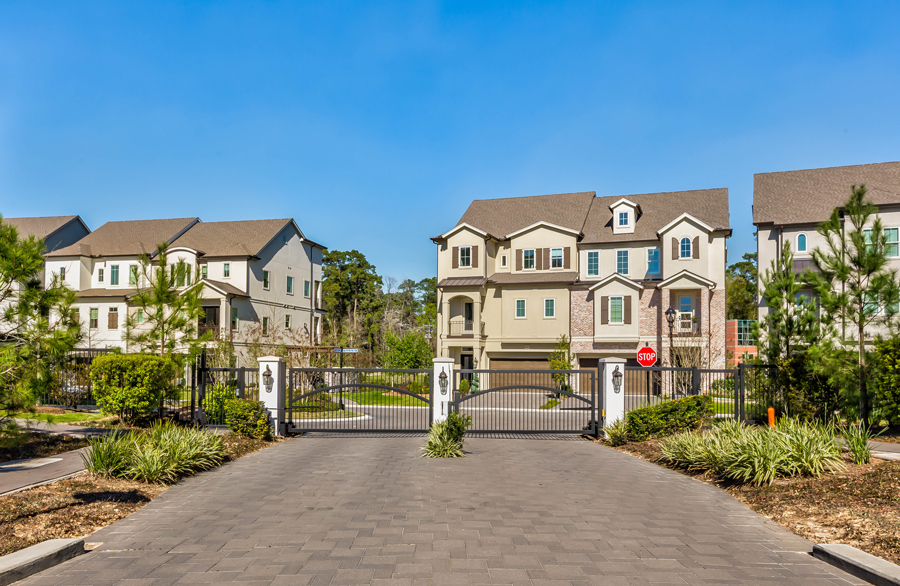
For instance, developments along History Row and Colonial Row feature imposing, three- and four-story brownstones and townhomes characterized by extensive masonry, wrought-iron balconies, plantation shutters, and precise, formal landscaping. Other sections, such as Southern Coast Drive, offer properties showcasing reclaimed pine flooring, Chicago brick accents, and New York-style loft configurations. The aesthetic mandate demands high-quality construction materials, resulting in streetscapes that prioritize timeless elegance over transient architectural trends.
Density and Structural Profiles
Building density in East Shore is significantly higher than in the surrounding, older villages of Grogan's Mill or Panther Creek. Lot sizes are intentionally compact to facilitate the urban "Garden District" footprint, frequently ranging from 1,500 to 4,500 square feet for attached and semi-detached properties.
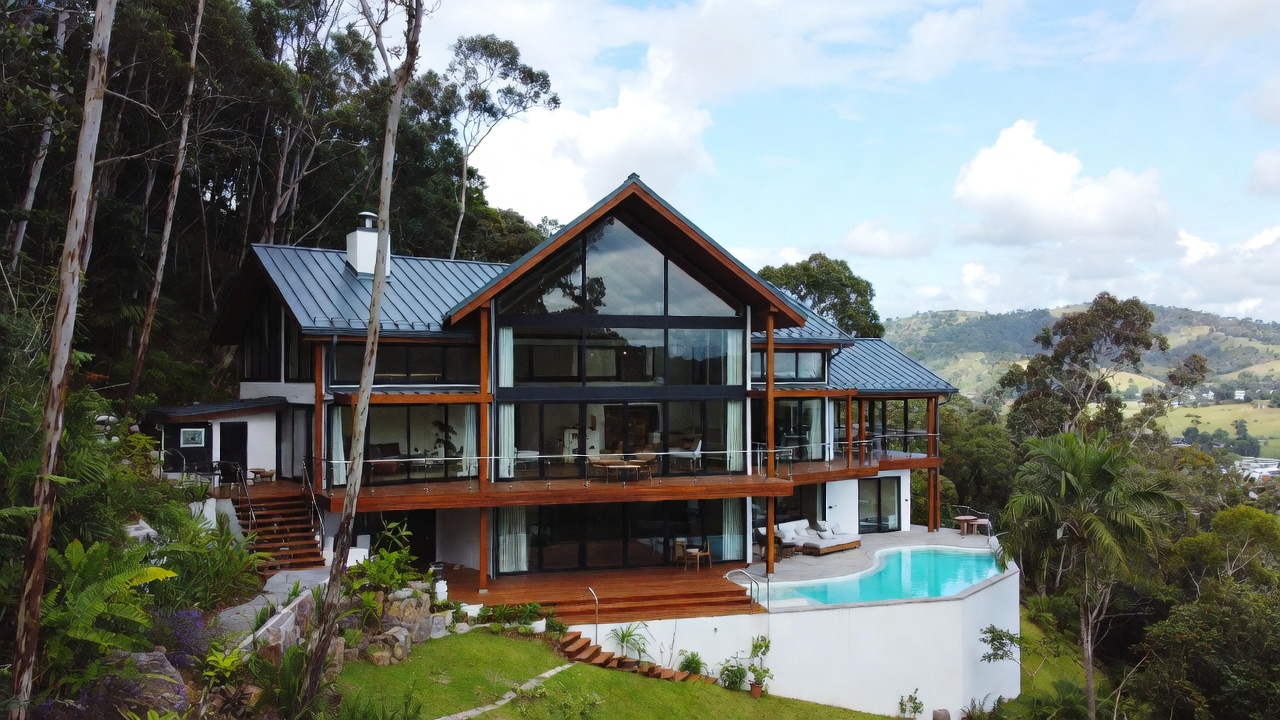
To maximize usable interior volume on these smaller footprints, vertical, multi-story construction is the norm. It is standard to find three- and four-story townhomes equipped with internal residential elevators, rear-lane alley garage access (to preserve the front facade aesthetics), and multiple balconies or rooftop terraces designed to capture lake or park views. Single-family detached homes are also highly prevalent, particularly along the immediate lakefront and in premium sections like East Bay Boulevard. These custom and semi-custom estates command much larger square footages, with median sizes around 3,818 square feet, though top-tier luxury properties can easily exceed 8,000 to 9,000 square feet.
Age, Renovation Patterns, and Occupancy
Development in East Shore commenced primarily in the mid-to-late 2000s, with a median build year recorded around 2012 across many single-family properties.7 Because the housing stock is relatively modern compared to the original 1970s and 1980s villages of The Woodlands, major structural renovation trends are currently minimal. Current upgrade patterns tend to focus on high-end cosmetic modernization—such as updating 2010-era kitchen finishes with modern stone and premium appliances (e.g., Thermador, Sub-Zero), or enhancing outdoor living spaces with custom summer kitchens, artificial turf, and fire features—rather than foundational or layout rehabilitation.
Regarding occupancy, while The Woodlands as a whole maintains an approximate mix of 71.7% owner-occupied and 28.3% renter-occupied households, East Shore supports a robust, high-end rental sub-market. Given the massive corporate presence in the immediate surrounding area, there is steady demand for luxury executive rentals. Townhomes and condos in East Shore are frequently utilized as high-end corporate housing, secondary residences, or transitional housing for relocating executives, with rental rates frequently spanning from $2,400 to over $5,500 per month depending on the property scale and proximity to the water.
Pricing & Market Positioning
The real estate economics of East Shore reflect its status as a highly desirable, finite micro-market with a significant financial barrier to entry. Pricing structures here operate independently of the broader regional averages, functioning as a premium luxury segment.
Price Ranges and Market Valuations
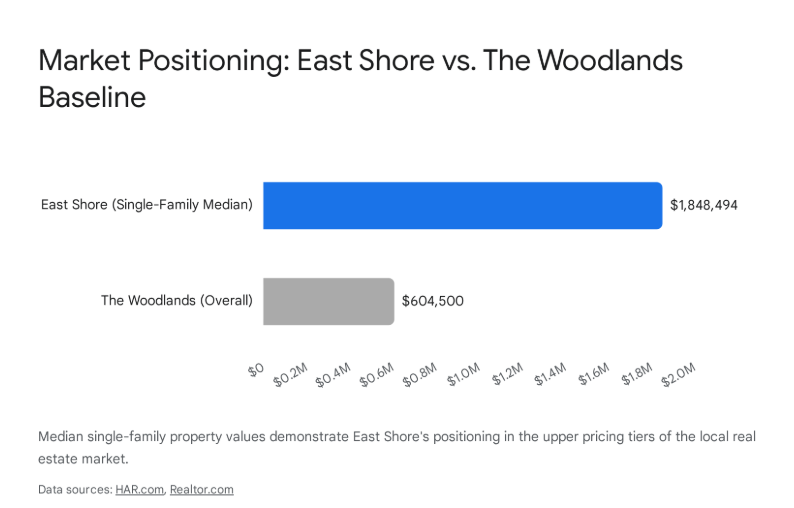
Current market data from late 2024 and early 2025/2026 illustrates a distinctly premium environment. While the overall median home price for The Woodlands macro-market hovers around $604,500 (at roughly $214 to $223 per square foot), East Shore commands exponentially higher valuations across all property types.
The median price per square foot in East Shore typically ranges from $444 to over $570 for active listings, representing a massive premium over the regional average.
Historical Appreciation and Market Dynamics
Historically, properties in East Shore demonstrate strong value retention and appreciation, insulated from wider market volatility by the finite supply of land in the Town Center and the unique combination of lakefront access and urban convenience.1
However, entering 2025 and 2026, the broader Woodlands market experienced a shift toward balance. Active housing inventory in the region saw significant jumps—increasing upwards of 40% to 56% year-over-year in mid-to-late 2025—giving buyers more options.41 Consequently, while absolute values remain high, average days on market have extended slightly (ranging from 43 to 49 days on average), and some pricing segments have seen slight median price softening as sellers adjust to increased competition.40 Despite this broader stabilization, the luxury and waterfront segments of East Shore remain highly competitive and resilient.
Taxation and Holding Costs
Buyers evaluating East Shore must meticulously factor in the specific holding costs associated with the location. Properties are subject to a combined tax rate that typically approaches 1.98% of assessed value.1 This figure is an aggregate of several taxing entities:
- Conroe Independent School District (CISD): ~0.9496%
- Montgomery County: ~0.3790%
- The Woodlands Township: 0.1714% (A notably low municipal rate)
- Lone Star College System: ~0.1076%
- Montgomery County MUDs (e.g., MUD 6/60/67): Rates varying from ~0.0698% to 0.1400%.7
Additionally, HOA and community association fees must be calculated into the baseline operational costs. For townhome and condominium owners, these fees are often substantial, covering extensive exterior maintenance, roof reserves, and premium community amenities, solidifying the lock-and-leave lifestyle at a financial premium.
Schools & Education (Neutral, Factual)
The educational infrastructure serving East Shore relies on highly established public school districts and a robust, varied network of private institutions within the immediate geographic vicinity.
Public School Zoning
Properties within East Shore fall under the jurisdiction of the Conroe Independent School District (CISD), a large regional district recognized for its comprehensive academic and extracurricular programming.1 CISD operates 67 campuses and educates approximately 71,000 students across the region.49 Based on current attendance boundaries, students residing in the East Shore neighborhood are generally zoned to the following feeder system:
- Lamar Elementary School (Grades PreK - 4).50
- Knox Junior High School (Grades 7 - 8).50
- The Woodlands College Park High School (Grades 9 - 12).50
These campuses offer a variety of standard and advanced placement curricula. Furthermore, CISD hosts several specialized academic programs accessible to zoned students, including the Academy of Science and Technology, the Academy for Science and Health Professions, and the Academy for Careers in Engineering and Science.49 Because CISD is a rapidly growing district, attendance boundaries are periodically reviewed and adjusted by an Attendance Boundary Committee (ABC) to manage campus capacity and future growth; therefore, prospective buyers are strictly advised to independently verify current and future zoning for specific property addresses directly with the district prior to purchase.
Private and Charter Education Options
For households seeking alternative educational models, The Woodlands area supports an extensive array of private, charter, and preparatory schools. Institutions located within a highly manageable commute of East Shore encompass a variety of pedagogical and religious affiliations.
Notable private institutions in the area include:
- The John Cooper School (Grades PreK - 12).52
- The Woodlands Christian Academy (Grades PreK - 12).52
- Legacy Preparatory Christian Academy (Grades PreK - 12).52
- St. Anthony of Padua Catholic School (Grades PreK - 8).52
- The Woodlands Methodist School (Toddler - Grade 8).52
- Center for Teaching & Learning (Grades PreK - 12).52
Additionally, charter options such as iSchool High (a public charter school) and various specialized academies offering distinct pedagogical approaches (e.g., Montessori Villa of The Woodlands, Great Oak School for Waldorf Education) are available in the surrounding area.
Amenities, Attractions & Infrastructure
The functional utility of East Shore is heavily reliant on its dense integration with premium physical and commercial infrastructure. The neighborhood operates as a geographic hub from which multiple lifestyle amenities can be accessed effortlessly.
Internal Parks and Open Space
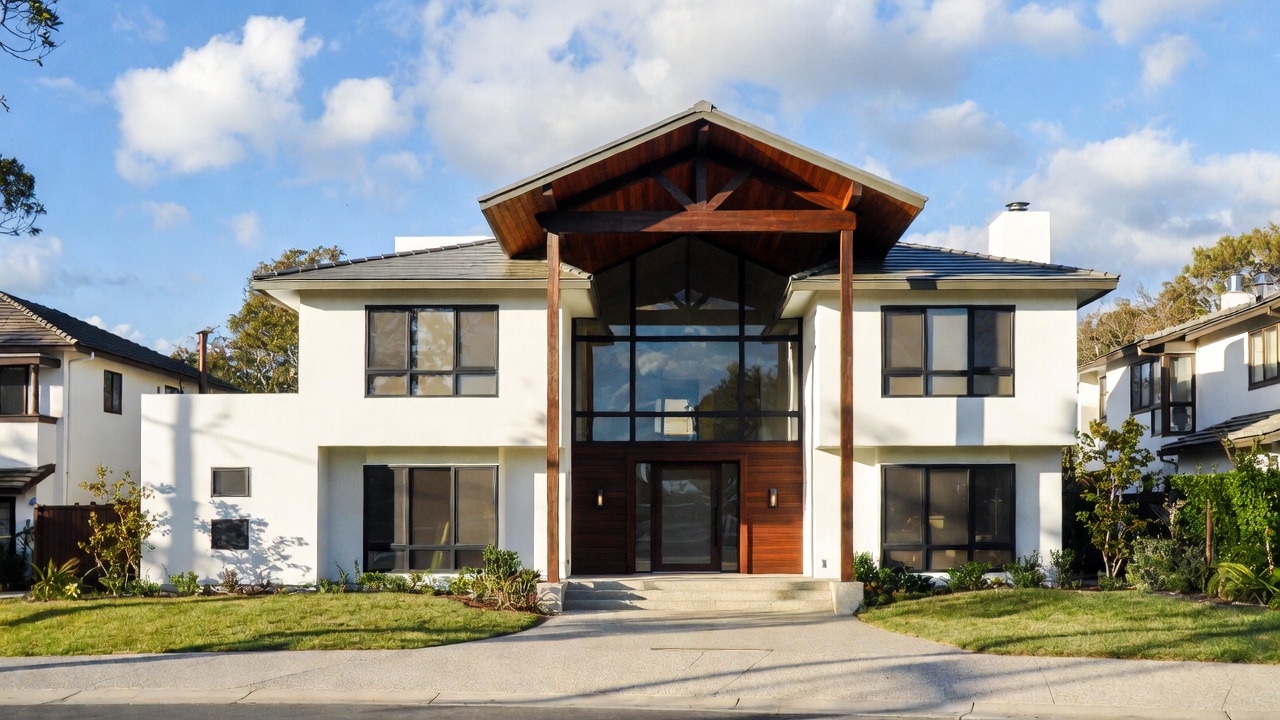
True to its "Garden District" designation, the internal infrastructure is built around an extensive network of formal outdoor spaces. The central East Shore Park acts as a community focal point. Smaller, highly manicured pockets—such as Olmstead Park, Colonial Park, Charleston Esplanades, The Ellipse, and The Mews—provide localized green space specifically designed for the surrounding residential rows.3 The network is woven together by ornamental streetscapes that prioritize pedestrian safety and aesthetic continuity.
The Civic and Retail Interface
East Shore borders the highest concentration of retail and entertainment infrastructure in Montgomery County. Residents have immediate pedestrian or trolley access to:
- Market Street: An open-air lifestyle center providing high-end retail, boutique shopping, an H-E-B grocery anchor, and varied dining options.
- The Woodlands Waterway & Hughes Landing: A highly developed commercial corridor featuring "Restaurant Row," corporate office spaces, luxury hotels, and mixed-use developments.
- The Cynthia Woods Mitchell Pavilion: A premier outdoor amphitheater situated just across the water/parkway that hosts major national touring acts and serves as the summer home for the Houston Symphony.
- Riva Row Boat House: Located nearby on the Waterway, providing additional public access to aquatic recreation, kayak rentals, and swan boats.
The density and concentration of these assets ensure that the neighborhood is fully equipped to support a highly active, culturally engaged lifestyle without requiring residents to leave the immediate zip code for essential services or premium entertainment.
Employment Access & Commute Analysis
While The Woodlands has evolved into a robust economic and employment center in its own right—hosting roughly 2,668 businesses—regional commuting remains a structural necessity for many residents. East Shore is strategically positioned to facilitate highly efficient, diverse commute patterns.
Localized Employment Hubs
A significant functional benefit of East Shore is its immediate proximity to the corporate headquarters and commercial office complexes situated within The Woodlands Town Center and Hughes Landing. For professionals operating within these localized hubs, the commute is virtually negligible, often executed via short pedestrian pathways, bicycle, or the Town Center Trolley.
Furthermore, the major corporate campus for ExxonMobil, located in the adjacent Springwoods Village development (Spring, TX), is highly accessible. The driving distance is roughly 10 to 15 miles, yielding a typical vehicle commute time of 15 to 25 minutes (up to 35-45 minutes in heavy traffic) depending on density along Interstate 45 or the Hardy Toll Road.54 Commuter bus options and vanpools also frequently service this specific corporate route.
Commuting to the Houston CBD and Texas Medical Center
For residents commuting to the primary economic nodes of Houston—including the Central Business District (CBD), Greenway Plaza, the Museum District, and the Texas Medical Center—the neighborhood offers efficient routing options.
- Vehicle Routes: Direct access to Interstate 45 South is available immediately via Woodlands Parkway. Alternatively, the Hardy Toll Road provides a streamlined, toll-based route into downtown Houston, effectively bypassing much of the standard interstate congestion.53 Typical drive times to the CBD range from 35 to 50 minutes, highly contingent upon peak hour friction.60
- Transit Infrastructure: The Woodlands Township operates "The Woodlands Express," a dedicated, scheduled commuter bus service.58 Residents can utilize nearby Park and Ride facilities (such as the Research Forest or Sawdust locations) to access comfortable bus service directly to major Houston employment centers, featuring amenities like onboard Wi-Fi and mobile ticketing apps (WE TIX).58 This service significantly reduces the stress, cost, and physical toll of daily long-haul commuting, offering consistent travel times of roughly 35 to 45 minutes to the CBD.
Demographic Data (High-Level, Non-Interpretive)
The following data provides a neutral, statistical snapshot of the broader 77380 ZIP code and The Woodlands Census Designated Place (CDP), which encompasses East Shore and surrounding portions of the community. Data is based on recent U.S. Census Bureau estimates.
Note: Because East Shore is a highly localized, premium micro-market, its specific internal property values, income indicators, and ownership demographics likely skew significantly higher than the aggregate ZIP code and CDP baselines.
Comparative Positioning
To understand East Shore's precise value proposition within the regional market, buyers typically evaluate it against functional substitutes and adjacent premium neighborhoods within The Woodlands.

East Shore vs. Carlton Woods
Carlton Woods (and Carlton Woods Creekside) represents the absolute peak of luxury valuation and exclusivity in The Woodlands.8 The primary divergence between the two is the lifestyle and spatial footprint. Carlton Woods is a traditional, gated, golf-course community built around massive, multi-acre custom estates offering extreme privacy and a comprehensive country club ecosystem (featuring Tom Fazio and Jack Nicklaus courses).16 East Shore caters to an identical luxury pricing demographic but offers a high-density, urban-adjacent footprint. Buyers choose East Shore over Carlton Woods when they explicitly prioritize walking access to fine dining and cultural events over private land acreage, extreme isolation, and golf amenities.
East Shore vs. Grogan's Mill
Grogan's Mill is the oldest original village in The Woodlands and is situated immediately adjacent to East Shore.8 Grogan's Mill offers historic charm, heavily forested, large traditional lots, and a significantly more accessible entry price point.66 Buyers evaluating both areas are choosing between the dense, newly constructed, architecturally formal environment of East Shore, versus the established, mature pine canopy, potential for heavy remodeling, and traditional suburban layout of Grogan's Mill.
East Shore vs. Panther Creek
Panther Creek also offers extensive access to Lake Woodlands and features lush, green settings and established homes.17 However, Panther Creek is predominantly a traditional suburban environment where vehicular travel is required for most daily errands.68 East Shore commands a significant price premium over Panther Creek due to its immediate pedestrian interface with the Town Center, its newer construction, and its highly specific, mandate-driven "Garden District" architectural zoning.

Strengths, Constraints & Tradeoffs
An objective evaluation of East Shore reveals distinct operational advantages alongside practical spatial and regulatory limitations that prospective residents must accurately calculate prior to acquisition.
Key Advantages

Unmatched Urban-Suburban Synergy
East Shore is the premier location within the region that successfully pairs natural lakefront tranquility with immediate, frictionless pedestrian access to a major commercial and entertainment core.

Architectural Cohesion
Stringent deed restrictions, meticulous landscaping, and high-quality construction ensure an aesthetically pleasing, historically resonant streetscape that protects property values and prevents visual degradation.

Maintenance Efficiency
The high availability of townhomes, condominiums, and HOA-managed properties allows for a high-end "lock-and-leave" lifestyle, heavily supported by the private East Shore Clubhouse and comprehensive association services.

Commuter Infrastructure
Proximity to Interstate 45, the Hardy Toll Road, and the Woodlands Express Park-and-Ride facilities provides highly efficient, multi-modal routing to major Houston employment centers.
Common Limitations

High Financial Barrier to Entry
The neighborhood features some of the highest absolute prices and price-per-square-foot metrics in the region, demanding a substantial financial commitment.

Reduced Lot Acreage and Density
For purchasers expecting traditional suburban yard space, private acreage, or distance from neighbors, the high-density, zero-lot-line configuration of many East Shore properties will present a significant structural constraint.

Stringent Regulatory Environment
The aggressive architectural controls and rigorous HOA guidelines dictate strict compliance regarding property modifications, paint colors, and exterior maintenance, which limits individual customization.
Evaluated Tradeoffs
Buyers evaluating East Shore ultimately execute a clear tradeoff: they forfeit expansive private land acreage and isolation in exchange for geographic convenience, aesthetic formalism, and low-maintenance infrastructure. They accept the higher density and premium price points as the necessary cost for the functional ability to walk to fine dining, utilize private community pools, and seamlessly integrate into the highly active civic life of The Woodlands Town Center.
Conclusion: Who This Neighborhood Typically Fits
Based on location economics, housing supply realities, and observable utilization patterns, East Shore is structurally optimized for specific behavioral profiles.
The neighborhood is highly aligned with households that prioritize walkability, urban convenience, and aesthetic consistency over property acreage and deep suburban isolation. It is a functional, ideal fit for highly mobile professionals, executives, or dual-residence owners who require a sophisticated "lock-and-leave" environment where exterior maintenance is heavily mitigated by local associations. Furthermore, the community serves those who desire immediate, low-friction access to high-end retail, diverse dining, and cultural events without the continuous necessity of vehicular transit.
Conversely, purchasers who require extensive private outdoor space for recreational use, who prefer an unregulated environment to execute highly personalized property modifications, or who seek entry-level suburban pricing volume will find the structural, regulatory, and economic realities of East Shore to be severely misaligned with their objectives. Ultimately, East Shore functions as a premium, highly specialized residential zone meticulously engineered for those seeking a sophisticated, maintenance-efficient urban lifestyle deeply embedded within a natural, lakefront setting.