TL;DR: The Woodlands and Spring sit side-by-side in North Houston, share ZIP code overlap, and are constantly confused — but they are very different real estate markets. The Woodlands is a master-planned community built by Howard Hughes Corporation since 1974, with home prices from $350K to $5M+, top-rated Conroe ISD schools, and amenities like Market Street and the Cynthia Woods Mitchell Pavilion. Spring is an older, more organic community spanning a larger geographic area, with home prices typically $220K–$800K, served by Klein ISD and Spring ISD, and offering better affordability and a more lived-in feel. If you want polished, walkable, and resort-like, choose The Woodlands. If you want more house for the money, mature trees, and flexibility on school zones, Spring is often the better play.
Drive north on I-45 out of Houston and somewhere around exit 73 the conversation in the car changes. One spouse says “I want to live in The Woodlands.” The other says “What about Spring? It’s cheaper and it’s right next to it.” Both are technically correct. Both are also looking at two very different places.
These two North Houston suburbs share borders, share ZIP codes in a few spots, and share the same general commute window into downtown Houston and The Energy Corridor. But the median home price gap between them is over $200,000. The school districts are different. The feel is different. The buyer profile is different.
As a North Houston-focused team, we get this question every week: Woodlands or Spring — which one is better? The honest answer is “better for whom?” This guide walks through the side-by-side so you can answer it for yourself.
The Quick Identity Check
The Woodlands, TX
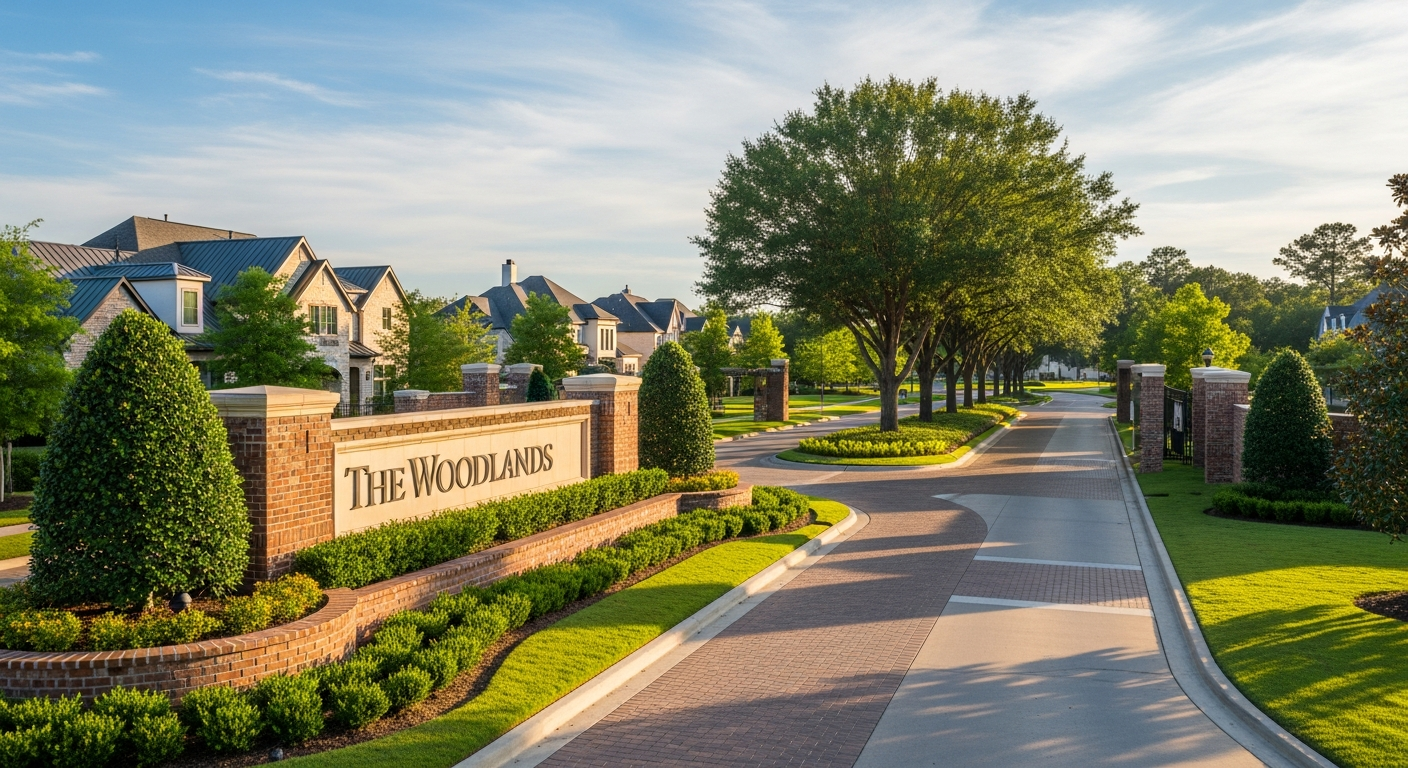
The Woodlands is a master-planned community — one of the most successful in the United States. Founded in 1974 by oilman George Mitchell and now developed by the Howard Hughes Corporation, it covers roughly 28,000 acres and houses 120,000+ residents across a series of “villages.” Every street, park, retention pond, and commercial corridor was planned before the first slab was poured.
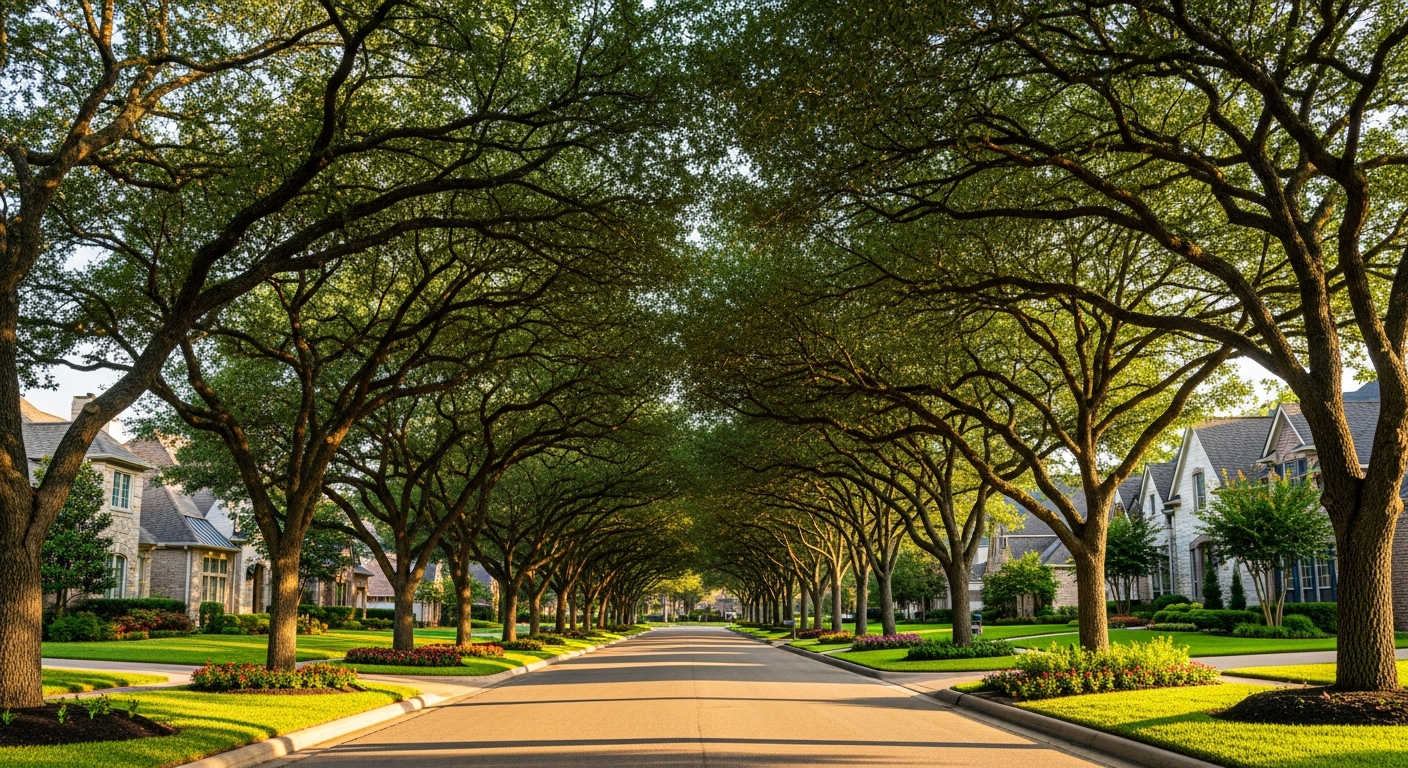
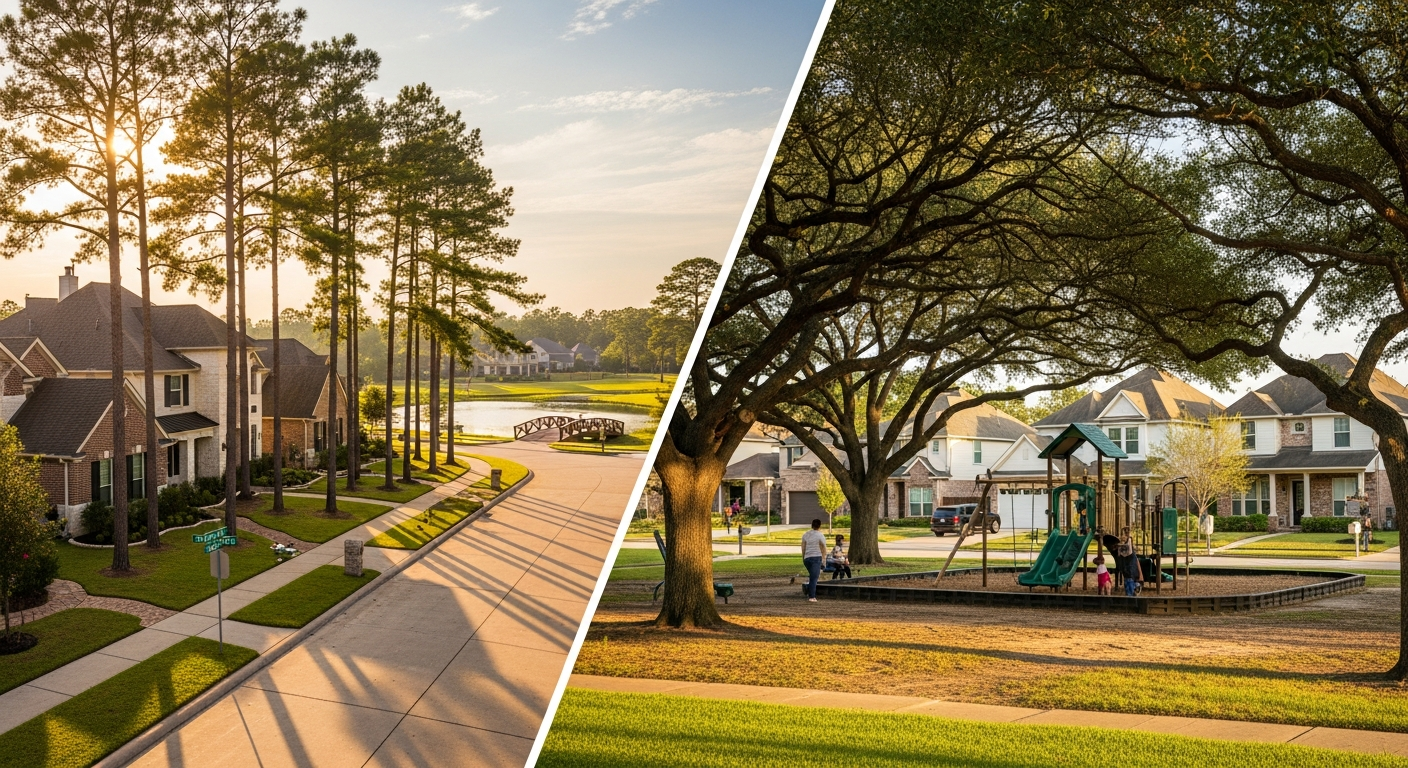
What that means in practice: deed restrictions, pathway systems (over 200 miles of hike-and-bike trails), preserved tree canopy, and a consistent architectural feel. You’ll rarely see a falling-down fence next to a $2M home in The Woodlands — the covenants don’t allow it.
Key landmarks:
- Market Street — open-air retail and dining district
- The Woodlands Mall — upscale regional mall
- Cynthia Woods Mitchell Pavilion — world-class amphitheater (Top 5 in the country by annual ticket sales)
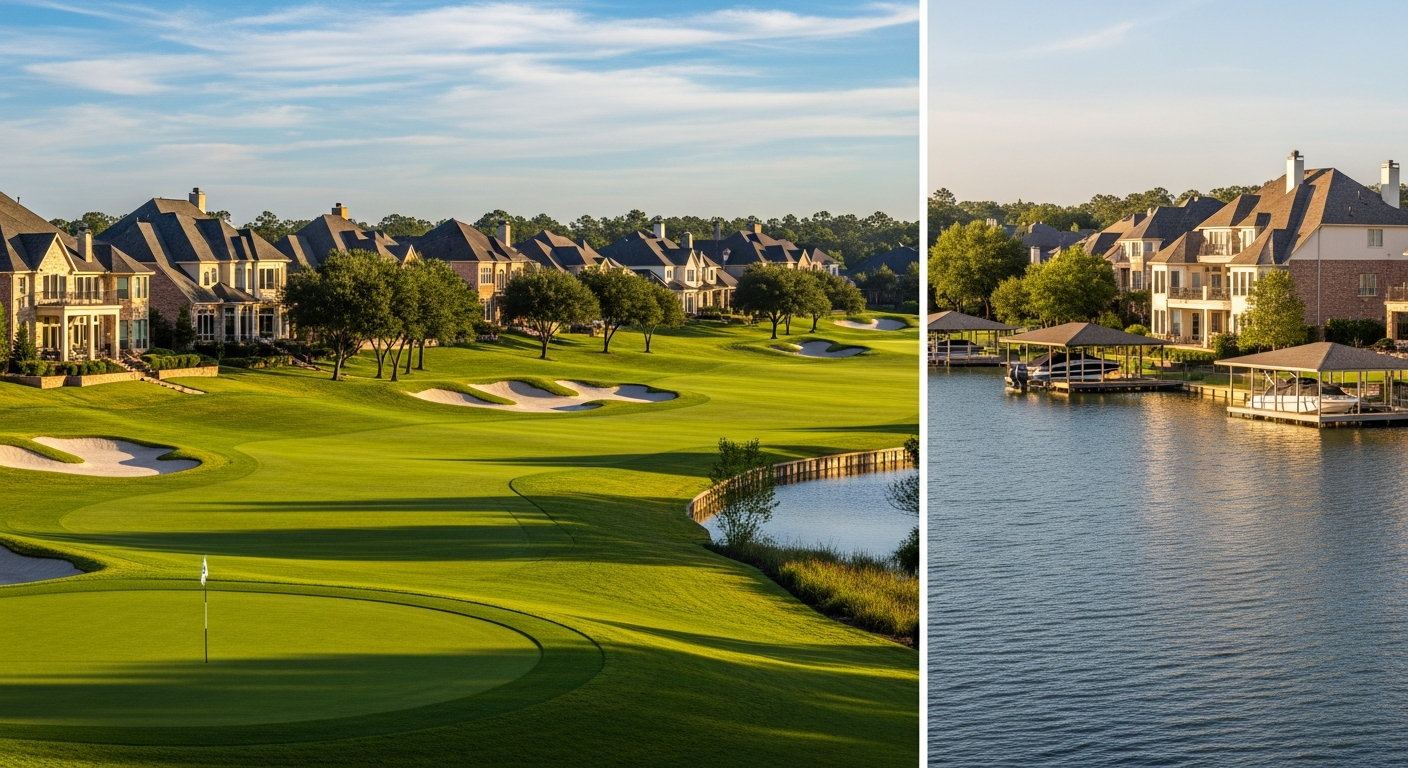
- Lake Woodlands — 200-acre lake with The Waterway and Hughes Landing
- Town Center — walkable urban core with high-rise condos and offices
Schools are served primarily by Conroe ISD (CISD), with The Woodlands High School and College Park High School consistently ranked among the top public high schools in Texas.
Spring, TX
Spring is older, less polished, and much harder to define on a map. It predates The Woodlands by about a century — the town grew up around the railroad in the 1870s. Today “Spring” refers to a large, unincorporated area of Harris and Montgomery counties that includes everything from historic Old Town Spring to modern subdivisions like Gleannloch Farms and Augusta Pines.
Because Spring grew organically rather than by master plan, you get tremendous variety. One street might be 1980s ranch homes on half-acre lots under mature oaks. The next subdivision over might be a 2015 golf-course community with stone-and-stucco McMansions. There’s no single “Spring look.”
Schools are split primarily between Klein ISD and Spring ISD, with Klein ISD generally carrying the stronger academic reputation. Klein Oak, Klein Collins, and Klein Cain high schools are the names buyers shop for.
Side-by-Side: The Numbers That Matter
| Factor | The Woodlands | Spring |
|—|—|—|
| Median home price | ~$525,000 | ~$320,000 |
| Typical price range | $350K – $5M+ | $220K – $800K |
| Price per sq ft | $195 – $275 | $130 – $180 |
| Year founded/platted | 1974 (master-planned) | 1870s (organic) |
| Total acreage/area | 28,000 acres | ~80 sq mi (varies) |
| Population | 120,000+ | 62,000+ (CDP) |
| Primary school district | Conroe ISD | Klein ISD / Spring ISD |
| Top-rated high schools | The Woodlands HS, College Park HS | Klein Oak, Klein Collins, Klein Cain |
| Commute to Downtown Houston | 35–50 min | 30–45 min |
| Commute to Energy Corridor | 45–60 min | 40–55 min |
| Walkability | High (in Town Center) | Low (car-dependent) |
| HOA fees typical | $900 – $2,500/yr | $400 – $1,200/yr |
| Property tax rate (approx) | 2.0% – 2.3% | 2.2% – 2.8% |
Numbers move quarter by quarter, but the gap between the two markets has stayed remarkably consistent — Woodlands homes typically trade at a 50–70% premium over comparable Spring homes.
Master Plan vs. Organic Growth
This is the single biggest lifestyle difference.
The Woodlands was designed. Trails connect villages. Commercial is zoned away from residential. Every village has its own pool, park, and elementary school within walking distance. The developer still owns much of the commercial real estate, so Market Street and Hughes Landing get updated and reinvested in constantly.
Spring happened. Roads widened to meet demand. Shopping centers went in where land was cheap. You drive to get anywhere. Some neighborhoods have HOAs and amenity centers, many don’t. The upside is flexibility and lower fees. The downside is that the experience is inconsistent — a stunning street can be two blocks from a tired one.
Buyers who come from Dallas suburbs like Southlake, Frisco, or The Colony tend to gravitate toward The Woodlands because it feels familiar. Buyers relocating from more urban or mixed markets often find Spring more authentic and easier to afford.
Amenities and Lifestyle
The Woodlands wins on:
- Concerts and events (Cynthia Woods Mitchell Pavilion)
- Walkable dining and retail (Market Street, Hughes Landing, The Waterway)
- Parks and trails (200+ miles)
- Youth sports facilities (Bear Branch, Alden Bridge sports parks)
- Health care (Houston Methodist The Woodlands, Memorial Hermann The Woodlands)
- Corporate employment (ExxonMobil campus, Hewlett Packard Enterprise, Chevron Phillips)
Spring wins on:
- Old Town Spring historic shopping and dining district
- Mature, wooded lots (many subdivisions built in the 80s and 90s)
- Golf communities at a reasonable price (Augusta Pines, Gleannloch Farms)
- Proximity to Grand Parkway (99) retail explosion
- Access to both Bush Intercontinental (IAH) and The Woodlands employers
- Budget-friendly family neighborhoods
Commute Reality Check
Both communities sit along the I-45 / Hardy Toll Road / Grand Parkway (99) corridor, so commute options are similar. The real driver of your commute isn’t Woodlands vs. Spring — it’s which side of I-45 you live on and whether you have Hardy or Grand Parkway access.
- Downtown Houston: 30–50 minutes from either, worse in rush hour on I-45
- Energy Corridor (I-10 west): 45–60 minutes, better via Grand Parkway
- Greenspoint / IAH Airport: 20–30 minutes
- Galleria / Uptown: 40–55 minutes
- Exxon Campus (Springwoods Village): 5–15 minutes from most addresses in either community
If you work at the Exxon campus or the new Hewlett Packard Enterprise headquarters, both Woodlands and Spring are realistic — Spring is often a shorter commute.
Who Should Buy in The Woodlands
- Relocating executives with corporate packages, especially anyone placed on the Exxon or HPE campus
- Families prioritizing CISD schools, particularly The Woodlands HS or College Park HS feeders
- Empty nesters wanting walkable Town Center condos or low-maintenance patio homes in Creekside Park
- Buyers at the $500K–$2M range who want master-planned consistency and strong resale
- Luxury buyers $2M+ targeting Carlton Woods or The Estates
Who Should Buy in Spring
- First-time buyers and move-up buyers at $250K–$500K who want more square footage
- Families targeting Klein ISD (especially Klein Oak, Klein Collins, or Klein Cain feeder patterns)
- Investors looking for rental yield — Spring cash-flows better than The Woodlands
- Buyers who want mature trees and larger lots without paying Carlton Woods prices
- Golf community buyers who like Augusta Pines or Gleannloch Farms
Best Neighborhoods Within Each
Top Woodlands Villages
1. Carlton Woods — the luxury gated village inside The Woodlands; Jack Nicklaus Signature and Fazio courses; $1.5M–$5M+
2. Sterling Ridge — family favorite with strong CISD schools and access to trails; $500K–$1.2M
3. Alden Bridge — established village with sports parks and central location; $450K–$900K
4. Indian Springs — mid-size village, solid values, College Park HS feeder; $400K–$800K
5. Creekside Park — the newest Woodlands village, Tomball ISD schools, patio home and new-build inventory; $450K–$1.5M
6. Grogan’s Mill — the original village, mature trees, great price point; $350K–$700K
Top Spring Neighborhoods
1. Gleannloch Farms — master-planned golf community, Klein ISD; $400K–$900K
2. Augusta Pines — golf community near 99; Klein ISD; $350K–$800K
3. Auburn Lakes — newer family neighborhood, Klein Oak feeder; $400K–$700K
4. Klein Oak feeder neighborhoods (Champions North, Wimbledon Estates) — solid schools, established homes; $300K–$600K
5. Spring Trails — affordable family community in Spring ISD; $250K–$450K
6. Benders Landing Estates — larger lots, custom homes, quiet country feel; $500K–$1.2M
FAQ
1. Is The Woodlands technically part of Spring, TX?
No. The Woodlands is a separate census-designated place in Montgomery County (mostly), while Spring is a large unincorporated area straddling Harris and Montgomery counties. They share ZIP code overlap (77380, 77381, 77382, 77384, 77385, 77386, 77389) which is a major source of confusion. Your mailing address may say “Spring, TX” even if you live in The Woodlands — it’s a USPS naming quirk.
2. Which has better schools, Woodlands or Spring?
Conroe ISD schools in The Woodlands generally rank higher overall, particularly The Woodlands High School and College Park High School. However, Klein ISD (which serves much of Spring) has several highly-ranked schools as well — Klein Oak, Klein Collins, and Klein Cain high schools all post strong ratings. Avoid Spring ISD if academics are your top priority.
3. Are property taxes higher in The Woodlands or Spring?
Property tax rates in Spring are typically slightly higher (2.2–2.8%) than in The Woodlands (2.0–2.3%), but the Woodlands’ higher home values mean total tax bills are still significantly larger. A $500K Woodlands home and a $300K Spring home can end up with similar monthly tax payments.
4. Is The Woodlands worth the price premium?
For many buyers, yes — the amenities, schools, walkability, and long-term appreciation track record justify the premium. For buyers prioritizing square footage, lot size, or lower monthly carrying cost, Spring often delivers more house for the money. It’s a values question, not a math question.
5. Can I get into CISD schools living in Spring?
Only if your Spring address is inside the Conroe ISD attendance zone — which is rare. Most of Spring is zoned to Klein ISD or Spring ISD. Don’t assume a Spring mailing address means CISD. Always verify with the district before writing an offer.
6. What’s the best Woodlands village for families?
Sterling Ridge, Alden Bridge, and Creekside Park are the three most family-requested villages. Sterling Ridge has the strongest balance of schools, trails, and resale. Creekside Park is the newest and attracts buyers wanting new construction. Alden Bridge offers central location and strong CISD access.
7. What’s the best Spring neighborhood for the money?
Gleannloch Farms is the standout — you get master-planned amenities, a well-regarded golf course, strong Klein ISD schools, and home prices well below comparable Woodlands villages. Auburn Lakes and Augusta Pines are strong runners-up.
8. Will Spring catch up to The Woodlands in value?
Parts of Spring along the Grand Parkway corridor and in Klein ISD feeders have appreciated strongly over the last decade. But the master-plan structure of The Woodlands — and the fact that Howard Hughes Corporation is still actively investing in it — creates a structural premium that’s unlikely to close fully. Spring will keep appreciating, but it won’t become The Woodlands.
The Kink Team Perspective
We’ve sold homes on both sides of this line. Our take:
The Woodlands is the right choice when you need the package — schools, amenities, resale, walkability — and you’re willing to pay for it. It’s the closest thing Houston has to a “you can’t go wrong” suburb at the $500K+ level.
Spring is the smart money play when you’re buying for fundamentals: good schools (pick Klein ISD), mature neighborhoods, and more house per dollar. It’s also the better call if you want flexibility — you’re not locked into a master-plan’s rules and fees.
The worst mistake we see buyers make: falling in love with a Spring address that has a “The Woodlands” ZIP code and assuming the schools and amenities come with it. They don’t. Always verify the school zoning, HOA, and community before you tour.
Ready to Compare in Person?
If you’re weighing Woodlands vs. Spring, the only way to truly decide is to see them back-to-back. The Kink Team knows every village in The Woodlands and every feeder pattern in Klein and Spring ISD. We’ll build a tour that shows you both honestly — the wins and the tradeoffs — so you can make the right call for your family and your budget.
Call or text The Kink Team today. We’ll put together a side-by-side home tour that covers both communities at your price point, with a clear breakdown of schools, HOA costs, commute, and resale outlook. North Houston is our backyard — let us help you make it yours.